Elbogen
Elbogen, Bohemia · Porcelain · also recorded as Haidinger
Marks
Plate I🔗
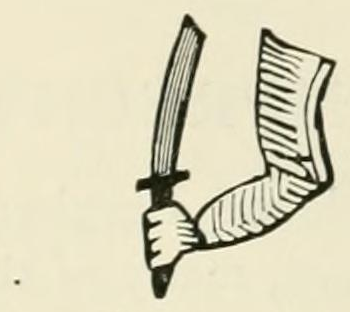
from 1815
An arm holding a scimitar · stamped without colour · engraved in the sourceChaffers 1891, p.476Chaffers blazons it precisely: 'heraldically or, a dexter arm habited gules, holding a scimitar arg.' The device is a pun on the town — Elbogen means elbow — which is why an arm appears on porcelain with no other heraldic reason to be there.
What the source records
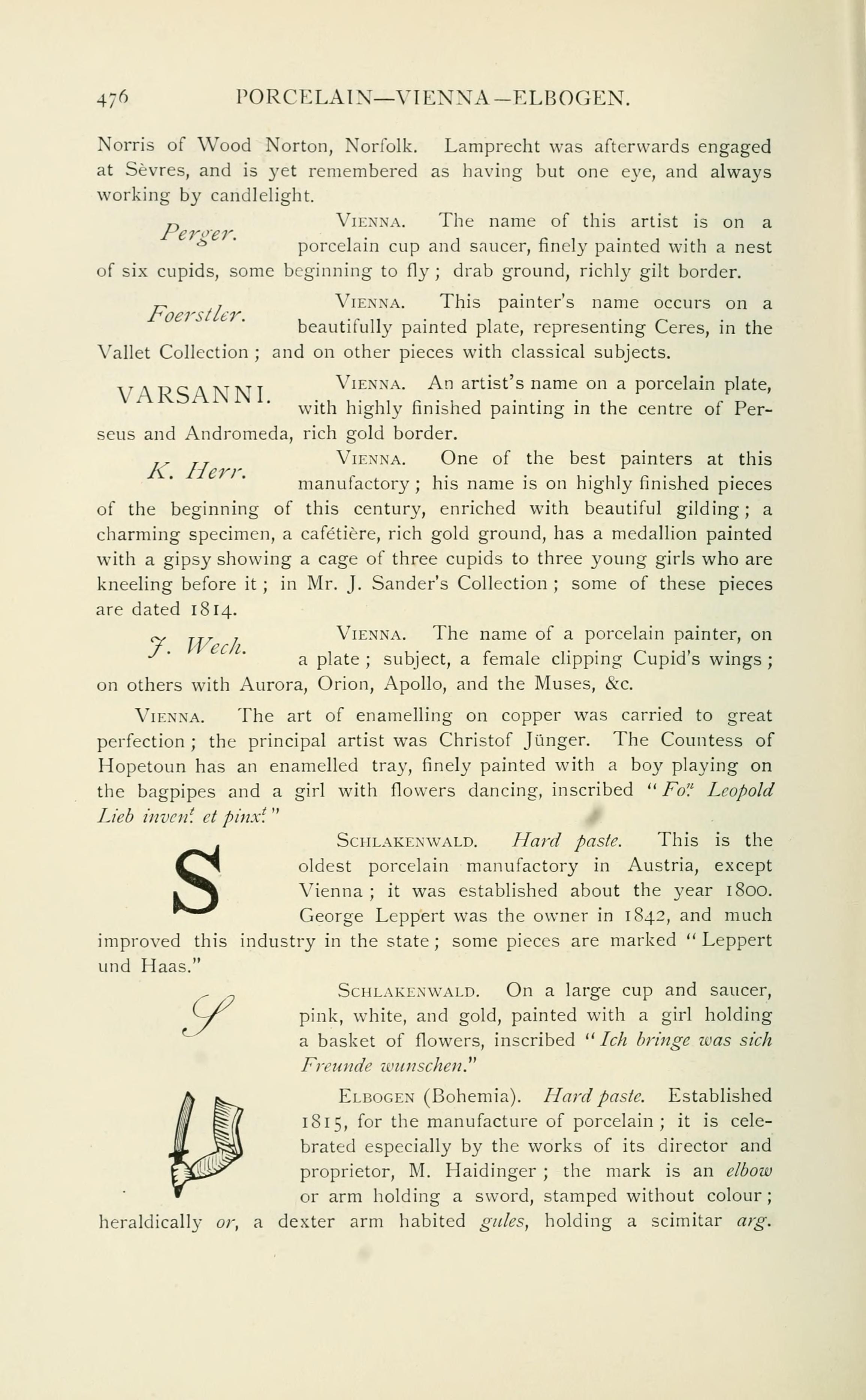
- Established in 1815 for the manufacture of hard-paste porcelain.Chaffers 1891 · p.476
- The works are celebrated especially for the production of their director and proprietor, M. Haidinger.Chaffers 1891 · p.476
- The mark is stamped without colour — impressed rather than painted.Chaffers 1891 · p.476
Why this differs from other listings
The mark is a canting device: Elbogen is German for elbow, so the factory signed itself with a bent arm. Knowing that turns an obscure pictorial stamp into something you can reason about rather than merely match, and Chaffers supplies the full heraldic blazon rather than a vague description.
The source page
What this entry does not establish
- Chaffers gives no closing date and no variant marks for the works.
- That the mark is impressed rather than painted is stated for the mark shown; it does not follow that every Elbogen piece is marked the same way.
Questions
What marks does Chaffers 1891 record for Elbogen?
1 on p.476: An arm holding a scimitar (from 1815). 1 of them are engraved in the source and are reproduced above; the rest are described in words only.
What dates does the source give?
The dates Chaffers attaches to these marks fall between 1815. They are his, not an inference drawn here, and several are given as approximate or open-ended in the original wording shown on each plate.
Where was Elbogen?
Elbogen, Bohemia. The source also records the name as Haidinger.
Can this page tell me what my piece is worth?
No. This site reports what one nineteenth-century reference recorded, and cites the page so you can check it. It does not authenticate objects, value them, or offer an opinion on a specific piece.