Crown Derby
Derby, England · Porcelain · also recorded as Derby, Duesbury & Kean, Bloor Derby, Derby-Chelsea
- Crown
- Crossed device
- Batons
- Cross
- Square
- Block capitals
- Dated in the mark
- Initials
- England
- Porcelain
- 1750–1799
Marks
Plate I🔗
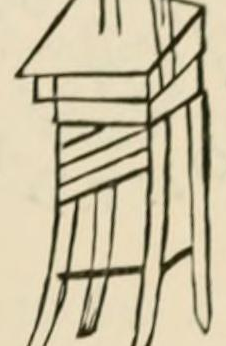
Recorded by Chaffers on a porcelain plate painted with trees and birds in blue en camaïeu, with eight compartments of flowers on the rim, in the possession of the Rev. Henry Legge. Derby-Chelsea is a distinct period from the Crown Derby marks below it.
Plate II🔗
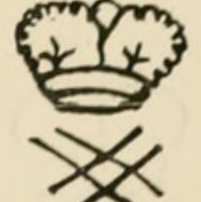
Recorded on a handsome gilt Derby tea service in the possession of the Earl of Chesterfield.Chaffers 1891, p.753
Chaffers gives no date for this one. It is the base form that the later dated marks add to.
Plate III🔗
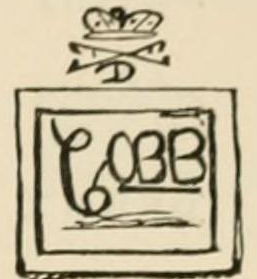
Recorded on a porcelain plate of Oriental pattern in the South Kensington Museum.Chaffers 1891, p.753
Chaffers adds that the square is sometimes used without the crown — so a piece carrying only the impressed square is not unmarked.
Plate IV🔗
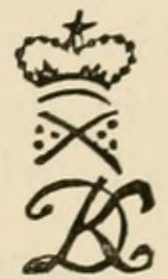
after 1795
Crown, crossed batons and DK · painted in purple · engraved in the sourceRecorded on a large china mug painted with a landscape and rainbow, gilt edges, in the collection of the Rev. T. Staniforth.Chaffers 1891, p.753
The mark of Messrs Duesbury & Kean. Chaffers says it was used occasionally after 1795 — occasionally, not as the standard mark.
Plate V🔗
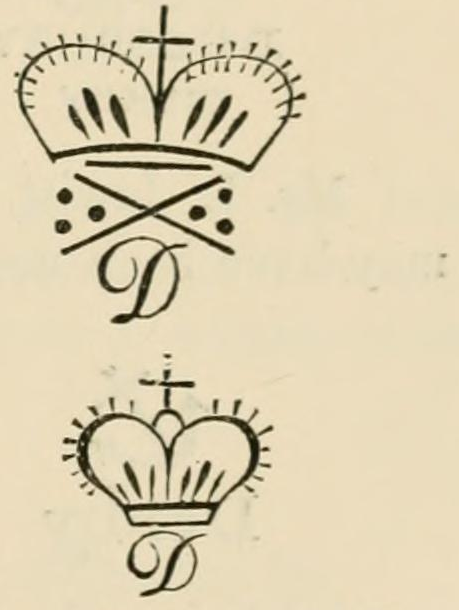
c.1780–1830
Crown above a cross, three dots in each side angle, capital D below · usually red; also blue and violet · engraved in the sourceChaffers 1891, p.753Chaffers describes this as a later mark than the preceding, 'used from about 1780 by the Duesburys, and continued by Mr. Robert Bloor as late as 1830'. He notes the violet is the oldest and most prized. The plate shows two forms because the source engraves two: the full mark, and the reduced version where the cross is omitted and only the crown and letter are pencilled on the ware.
Plate VI🔗
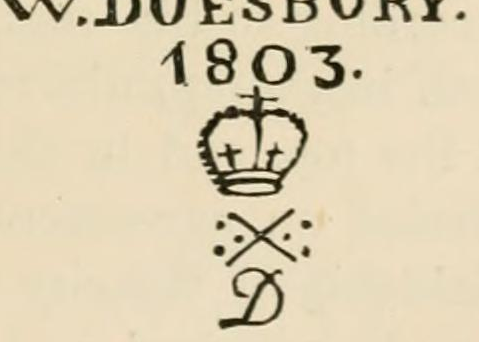
1803
W. DUESBURY 1803, with crown, crossed batons and D · painted · engraved in the sourceRecorded on a green leaf dessert dish, veined and coloured after nature, from a set made for the second W. Duesbury.Chaffers 1891, p.753
A dated mark, which is rare. Chaffers adds that the letter is occasionally found as a Roman capital D rather than the script form.
Plate VII🔗

c.1810
Crown, crossed batons, D and a pattern number · red and violet; the violet is the earliest · engraved in the sourceRecorded on a florid tea and coffee set of the toilet pattern made for Mr Roger Cox of Sponden Hall by W. Duesbury.Chaffers 1891, p.753
The numeral below the mark is a PATTERN number. It does not encode a year, and reading it as one is the obvious mistake to make.
What the source records
- The crown-above-cross mark with a capital D was used from about 1780 by the Duesburys and continued by Mr Robert Bloor as late as 1830.Chaffers 1891 · p.753
- Of that mark, the violet-coloured version is the oldest and the most prized by collectors; it also occurs usually in red and occasionally in blue.Chaffers 1891 · p.753
- The DK mark is that of Messrs Duesbury & Kean, used occasionally after 1795.Chaffers 1891 · p.753
- Where a pattern number appears below the mark, the number refers to the pattern rather than to a date or a workman.Chaffers 1891 · p.753
- Chaffers cites specific pieces for several of these marks — a gilt Derby tea service belonging to the Earl of Chesterfield, a porcelain plate of Oriental pattern in the South Kensington Museum, and a china mug in the collection of the Rev. T. Staniforth.Chaffers 1891 · p.753
Why this differs from other listings
Derby marks are usually reproduced as a row of crowns with no indication of what separates them. Chaffers attaches dates and colours: DK is after 1795, the crown-and-cross runs from about 1780 to Bloor in 1830, and violet is earlier than red on the same device. He also states plainly that the numeral below the mark is a pattern number — the detail most likely to be misread as a date.
The source page
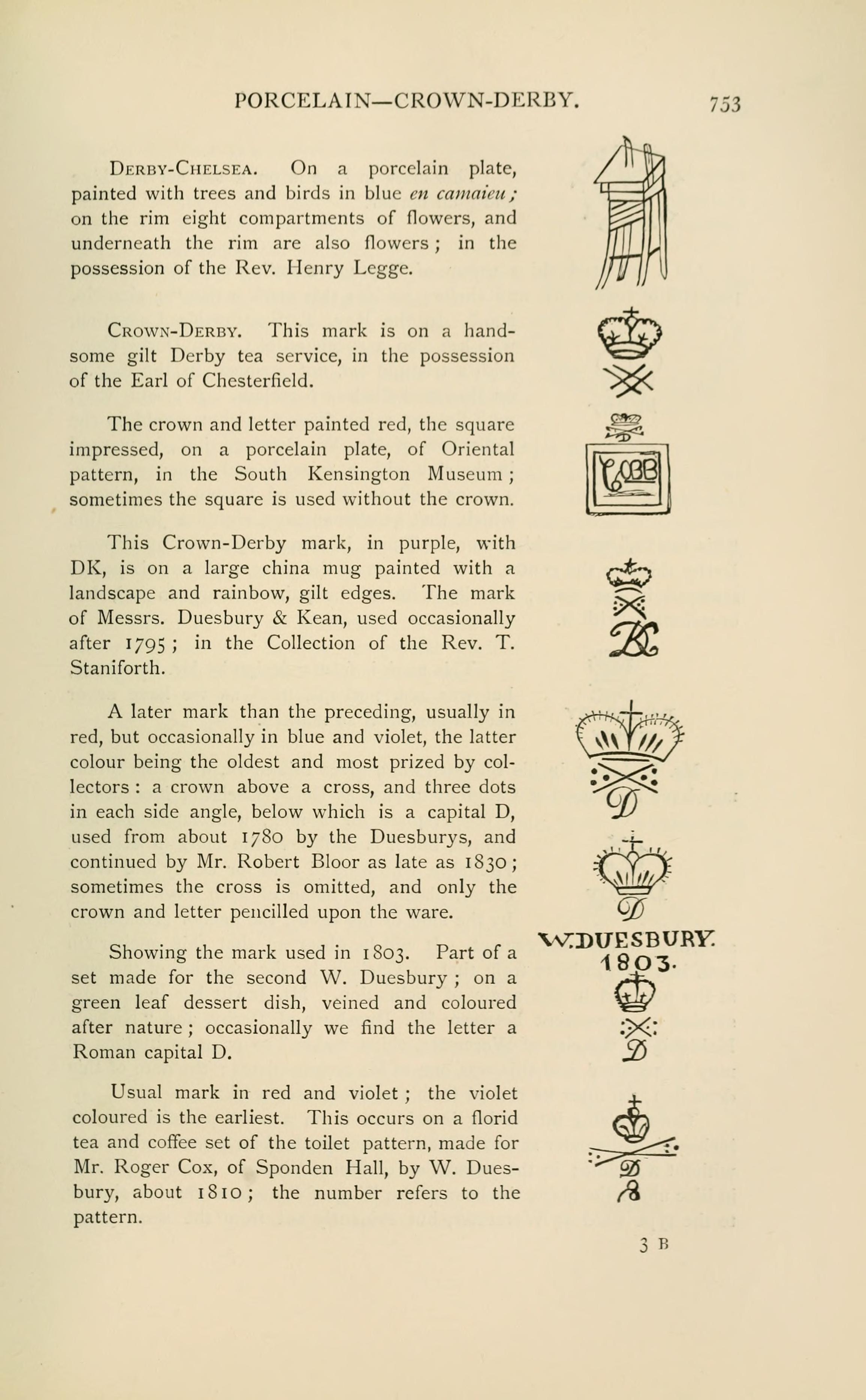
What this entry does not establish
- Two of the seven marks carry no date in the source, and this entry leaves them undated rather than inferring one from their neighbours on the page.
- Chaffers 1891 does not cover the twentieth-century Royal Crown Derby date-cypher system, which is what dates most pieces collectors actually encounter.
- The Derby-Chelsea plate belongs to a different period of the works and is included here because it shares the page, not because it is a Crown Derby mark.
Questions
What marks does Chaffers 1891 record for Crown Derby?
7 on p.753: Derby-Chelsea device; Crown above crossed batons; Crown and letter, above an impressed square; Crown, crossed batons and DK (after 1795); Crown above a cross, three dots in each side angle, capital D below (c.1780–1830); W. DUESBURY 1803, with crown, crossed batons and D (1803); Crown, crossed batons, D and a pattern number (c.1810). 7 of them are engraved in the source and are reproduced above; the rest are described in words only.
What dates does the source give?
The dates Chaffers attaches to these marks fall between 1780 and 1810. They are his, not an inference drawn here, and several are given as approximate or open-ended in the original wording shown on each plate.
Where was Crown Derby?
Derby, England. The source also records the name as Derby, Duesbury & Kean, Bloor Derby, Derby-Chelsea.
Can this page tell me what my piece is worth?
No. This site reports what one nineteenth-century reference recorded, and cites the page so you can check it. It does not authenticate objects, value them, or offer an opinion on a specific piece.